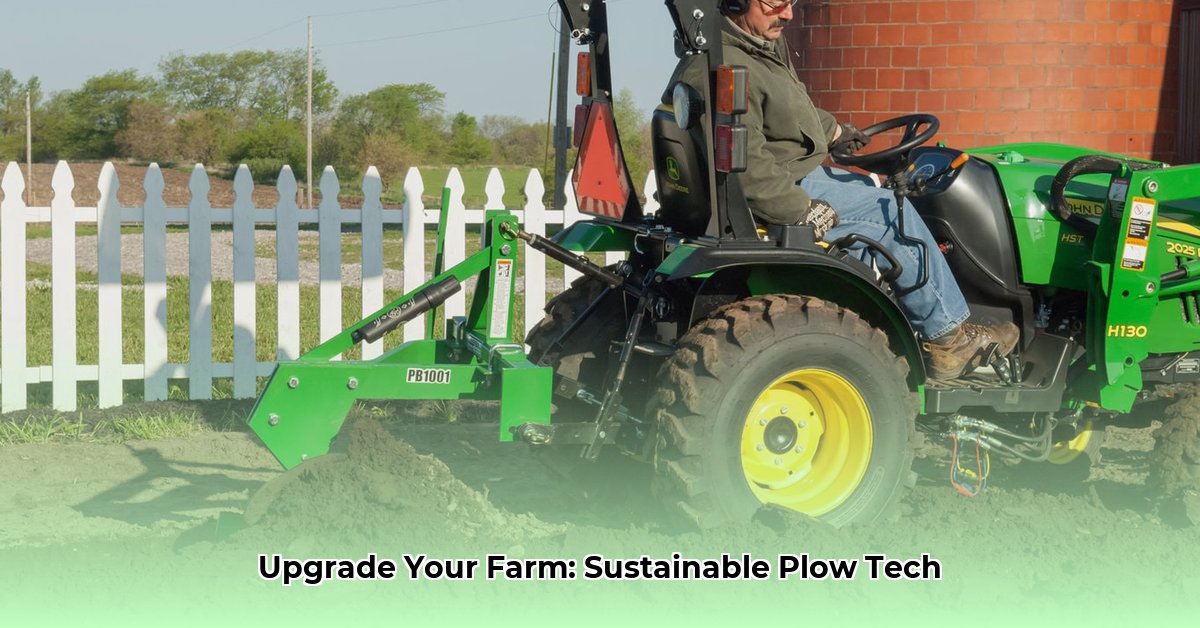
Understanding Your Soil: The Foundation of Sustainable Tillage
Before selecting a plow, understanding your soil's characteristics is paramount. Soil type dictates the appropriate tillage method and plow type. Is your soil heavy clay, sandy loam, or something else? This crucial first step determines the success of your tillage strategy. A soil test can provide valuable insights into your soil's composition, pH, and nutrient levels, guiding you toward the best plowing practices. Have you considered a soil test recently? Ignoring this can lead to inefficient plowing and reduced yields. For more on tillage options, check out this helpful resource on tractor tillers.
Tractor Plows: A Diverse Range for Sustainable Farming
Numerous plow types cater to diverse soil conditions and farming goals. Each plow offers unique advantages and challenges:
Moldboard Plows: The Traditional Approach
Moldboard plows completely invert the soil, effectively burying weeds and mixing organic matter. While effective for weed control and soil mixing, their aggressive action can lead to soil compaction and increased erosion. This traditional method, though powerful, may not be the most sustainable option long-term. "Repeated use of moldboard plows can damage soil structure, reducing water infiltration and increasing vulnerability to erosion," notes Dr. Sarah Miller, Soil Scientist at the University of California, Davis.
Chisel Plows: A Less Intensive Option
Chisel plows break up compacted soil without fully inverting it. This reduced tillage approach preserves soil structure, improves water infiltration, and reduces erosion. "Chisel plows represent a significant improvement in sustainability compared to moldboard plows, primarily due to their reduced soil disturbance," explains Dr. David Brown, Agricultural Engineer at Purdue University. Do you prioritize reduced soil disturbance and improved water retention? A chisel plow might be the right choice.
Disk Plows: Versatile and Adaptable
Disk plows slice and mix the soil, offering a middle ground between moldboard and chisel plows. Their adaptability makes them suitable for various soil types and tillage intensities. They are often used for incorporating cover crops and managing residue. How adaptable do you need your plowing equipment to be? Disk plows offer a balance of efficiency and soil conservation.
Subsoilers: Addressing Subsoil Compaction
Subsoilers penetrate deep into the soil, breaking up compacted layers without inverting the surface. This improves drainage, aeration, and root penetration, benefiting plant growth and overall soil health. "Subsoiling is a valuable tool for addressing subsoil compaction, particularly in areas with heavy clay soils," states John Smith, a farmer with over 20 years of experience in sustainable agriculture in Iowa. Are you facing issues with deep soil compaction? Subsoiling can be incredibly beneficial.
Modern Plow Technology: Enhancing Sustainability
Modern plows incorporate technology to enhance efficiency and sustainability:
GPS Guidance: Precision GPS systems guide the plow, ensuring straight and overlapping furrows, minimizing overlaps and fuel consumption. This reduces soil disturbance and boosts overall efficiency. How precise is your current plowing operation? GPS guidance can significantly enhance accuracy.
Variable Rate Technology: Advanced systems adjust plowing depth and intensity based on real-time soil conditions. This tailored approach optimizes tillage for different areas of the field. Imagine the potential for yield improvements! Variable rate technology offers the potential for significant yield gains.
Reduced Tillage Designs: Many modern plows minimize soil disturbance. These designs often incorporate features that manage residue effectively while preserving soil health. Are you committed to minimizing soil disturbance? This is a key feature of many modern plows.
Choosing Your Plow: A Practical Guide
- Assess your soil type: Conduct a thorough soil analysis to understand its texture, structure, and drainage characteristics.
- Define your goals: What are your primary objectives? Weed control? Improved drainage? Increased yields? Prioritize your goals to guide your plow selection.
- Consider your climate: Rainfall patterns, temperature fluctuations, and potential erosion risks significantly influence tillage choices.
- Evaluate plow types: Weigh the pros and cons of each plow type in relation to your soil, goals, and climate.
- Factor in cost: Account for the initial investment, maintenance expenses, and long-term operational costs.
- Seek expert advice: Consult with local agricultural extension agents or experienced farmers for personalized guidance.
Sustainable Farming: A Holistic Approach
Choosing the right plow is a crucial step in sustainable farming. However, it's only one component of a broader strategy. Consider implementing practices such as crop rotation, cover cropping, and no-till farming where appropriate to maximize the benefits of your chosen tillage method. Sustainable agriculture requires a holistic approach, constantly evolving to adapt to the needs of both your land and your goals.